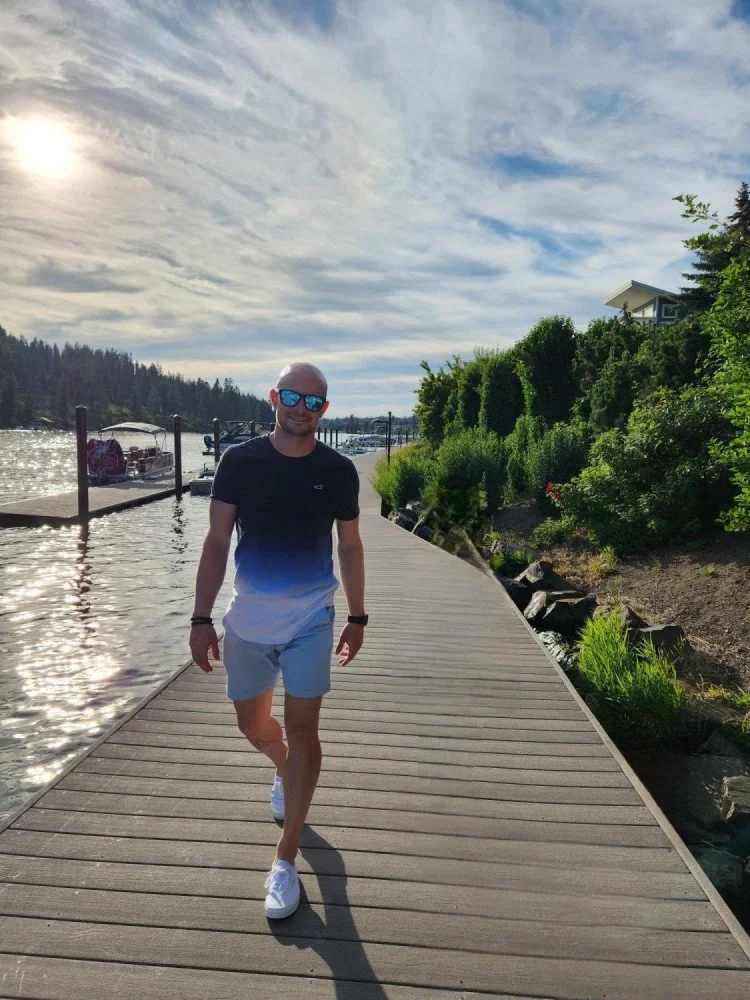
Walking
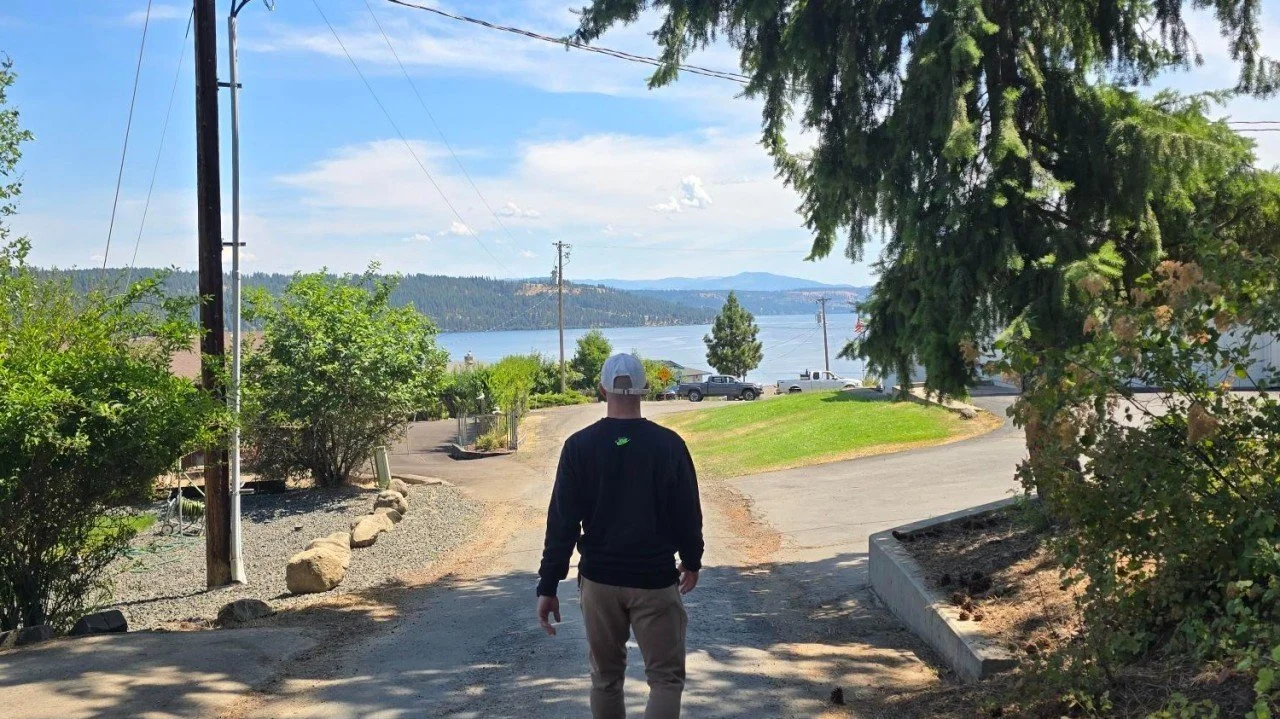
One foot in front of the other.
Day after day.
10,000 at a minimum.
That’s been my standard for seven years.
In 2025, I averaged 14,074 per day.
Something so simple.
So easy.
And so underutilized.
I’m talking about walking.
In 2019, I discovered a fitness influencer named Greg O’Gallagher and his Kinobody brand. The hook that grabbed me was something like:
“What if you could walk and dance your way to a six-pack?”
At the time, I was beating myself into the ground with high-intensity programs like Insanity. Running outside. Treadmills. Sprints. Every form of cardio you can think of — most of it high impact, unsustainable, and brutal on the body.
Years of football and athletics don’t age gracefully.
High impact doesn’t love me back.
My body lets me know.
For 23 years, I’ve trained 3–5 days a week. It’s in my DNA. It’s my outlet. My sanctuary.
But in 2018, I remember thinking:
“I guess I’ll just be one of those guys who works out hard but stays a little chubby.”
I didn’t want that — but I assumed it was genetics.
Then I discovered walking.

When you combine walking with a real understanding of nutrition (which, in my opinion, is 93% of the equation, with 5% walking and 2% lifting), everything changed.
In 2020, I went from a fluffy 160 lbs to 130 lbs.
For the first time in my life, I could see all my abs.
For the first time, I felt fully confident taking my shirt off in public.
Since then, I’ve never returned to 160.
I’ve stayed aware of my nutrition and continued to build muscle.
Walking became my therapy.
I listen to audiobooks.
I take calls.
I play music.
And most of all — I write.
Rain or shine. Hot or cold.
It doesn’t matter.
I’m outside, in the elements, getting my steps and protecting my sanity.
Walking doesn’t give instant gratification.
It compounds.
One day feels good.
Two days start to change you.
By the end of a week — you’re hooked.
10,000 steps is roughly 4.5–5 miles and burns about 350–500 calories.
And walking calories are special:
• They don’t spike hunger
• They don’t elevate cortisol
• They don’t inflame joints
• They don’t impair recovery
In a single day, walking:
• Improves insulin sensitivity
• Lowers blood glucose
• Enhances fat oxidation
• Moves lymphatic fluid
• Reduces stress hormones
• Improves digestion
• Improves sleep quality
Over 2–6 weeks of consistent 8k–12k steps:
• Waist shrinks before the scale moves
• Water retention drops
• Appetite stabilizes
• Energy evens out
• Fat loss becomes visible
• Less need to “diet harder”
Over months:
• Metabolic flexibility improves
• Mitochondrial efficiency increases
• Resting insulin levels drop
• Lipid profiles improve
• Leanness becomes easier to maintain
Over years:
• Insulin sensitivity is preserved
• Metabolic decline slows
• Visceral fat accumulation decreases
• Cardiovascular health improves
• Joint health and mobility improve
• Chronic inflammation lowers
• Body composition stabilizes with less effort
And the best part?
It’s sustainable.

And it’s kind to your body.
Like most things in my life, walking feels like a metaphor.
One good day is nice.
Two is better.
Weeks, months, and years are where the real results show up.
In a world addicted to instant gratification, this won’t sound sexy.
There’s no “hack.”
No trick.
Just truth.
Consistency is the win — even when it doesn’t feel like it.
Walking changed me physically and mentally.
I’ve rarely won on my first attempt at anything.
But my superpower has always been refining my abilities over time.
Eventually, I get to a place where you can’t beat me —not because I’m more talented, but because most people can’t persist long enough to keep honing their craft.
That’s what walking is.
The process is never punishment — it’s the point.
The path becomes clearer when you keep walking it.
Keep building
Alex de Golia